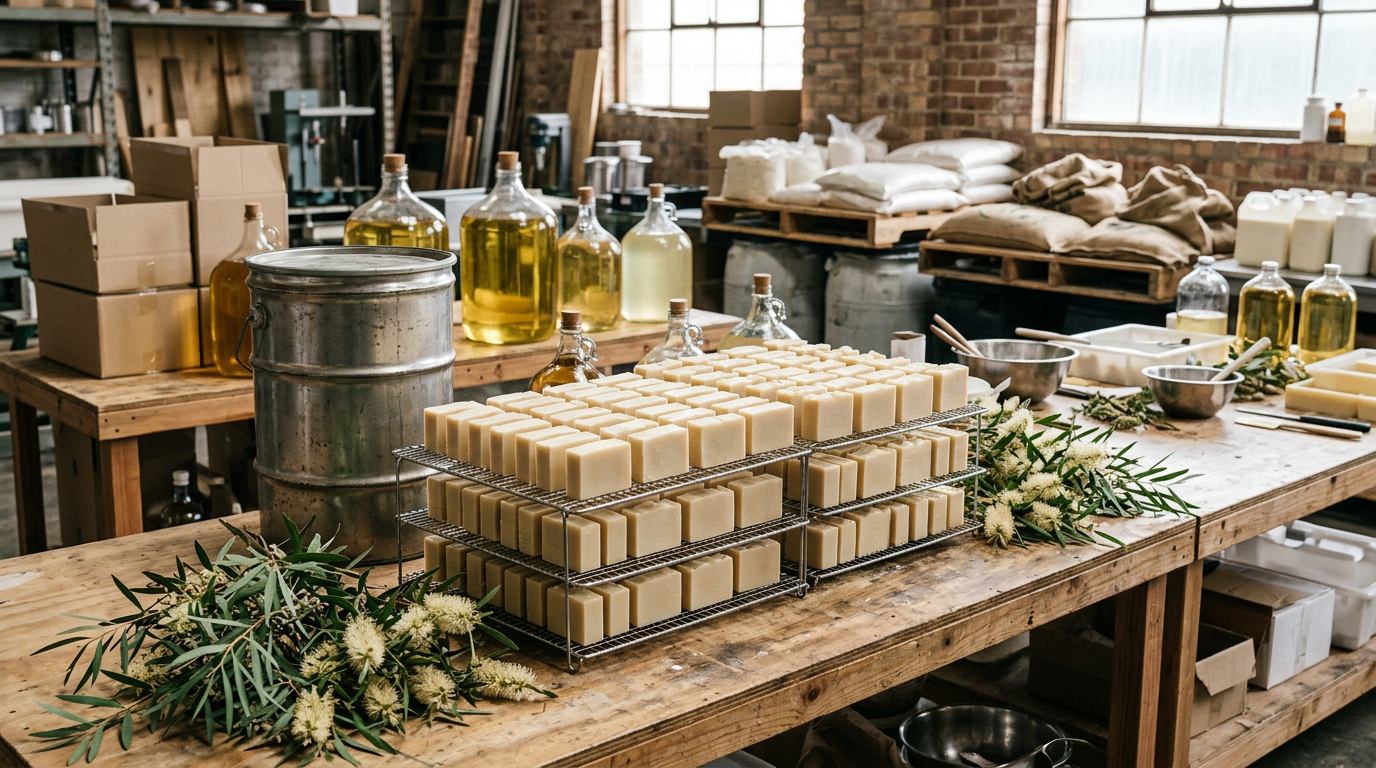
Soap studios and craft producers turn to cajeput when a bar or bench-made product needs a crisp, fresh scent that holds its own against other ingredients in the mix. This page is part of our Guide to Buying Cajeput Essential Oil in Bulk.
Start with a small size before committing to a production batch.
Cold-process soap and solid-format crafts put real demands on a scent: it has to survive a chemical reaction or a melt-and-pour step and still be recognizable in the finished bar. Cajeput's fresh, cool, fruity-camphorous character comes through clearly in that kind of work, which is part of why it appears across eight craft projects built around the oil.
It also works as a stand-alone scent in solid formats, not just as a supporting note. A pocket-sized solid cologne bar built almost entirely around cajeput is laid out in the solid cologne bar project, a useful reference for any studio building a wax-and-oil format product.
Soap makers generally add cajeput at the trace stage in cold-process work, since adding it too early can cause it to volatilize before the bar sets. Solid cologne and balm formats carry it at a higher share than a soap bar would, since there is no saponification step diluting the scent.
Craft studios working in small batches should still test scent retention through a full production cycle, whether that is a soap bar's saponification or a solid bar's cooling and setting, since cajeput's top-note character can read weaker in a finished piece than it did in the raw oil.
Studios usually start at the one-ounce size to test a new bar or bench formula, then step up to a five-pound drum once the recipe is set, with twenty-five-pound and four-hundred-pound sizing available for full production runs.
Pricing from five-pound to four-hundred-pound sizing is on /bulk/, or reach out via /contact/.