
Fresh Summer Blends with Cajeput: Beat the Stale Indoor Air
Something happens to indoor air in summer. Windows stay shut against the heat. Air conditioning runs all day. Humidity creeps in through every doorway, and by mid-afternoon the rooms that were perfectly pleasant in April start to feel heavy and close. If you've been reaching for your diffuser more often lately, you're not imagining it. Warm weather genuinely changes the air inside your home, and a well-chosen cajeput summer blend can do a lot to shift that atmosphere.
Cajeput essential oil, steam-distilled from the leaves and twigs of Melaleuca cajuputi, carries a bright, piercing freshness that reads a little like eucalyptus but with a softer, almost fruity warmth underneath. That profile makes it a natural anchor for summer diffuser work. It cuts through heaviness without adding sweetness, and it layers well with the citrus and herbal notes that most people already associate with warm weather.
This guide covers why cajeput earns its place in summer blending, how to pair it with other oils for different rooms and moods, and a handful of ready-to-use recipes you can try tonight.
Why Summer Air Feels Different (And Why It Matters for Blending)
Heat changes how odor molecules behave. Warmer air carries scent compounds more readily, which means existing smells in your home, whether from cooking, pets, laundry, or just people living their lives, become more present in summer than in winter. At the same time, sealed, air-conditioned spaces circulate the same air repeatedly. The result is a kind of olfactory monotony: the air isn't exactly unpleasant, but it feels used.
Diffusing in summer is partly about adding pleasant scent, but it's also about introducing volatility. Sharp top notes like cajeput, peppermint, and lemon move through a room quickly and create a perception of freshness even when the actual air quality hasn't changed. Think of it as a reset for your nose as much as anything else.
That's why heavy, resinous oils that shine in winter, such as frankincense, vetiver, or cedarwood, can feel suffocating when it's 90 degrees outside. Summer blending generally favors oils with high top-note content, and cajeput sits comfortably in that category.
The Case for Cajeput as a Summer Anchor Oil
Most blending guides position cajeput as a supporting player, something you add to eucalyptus blends for a bit more complexity. That's underselling it. Cajeput holds its own as a lead note, especially in warm weather, for a few specific reasons.
- It has brightness without harshness. Pure eucalyptus can feel medicinal in high concentrations. Cajeput shares that clean, sharp quality but rounds it with a subtle warmth that keeps blends from smelling clinical.
- It pairs across categories. Cajeput bridges the citrus family, the mint family, and the herbal family without clashing. That flexibility makes it easy to build varied blends from a single anchor.
- It performs well in heat. Because cajeput is itself a high-volatility oil, it doesn't suffer in warm diffuser conditions the way some heavier oils do. You get consistent diffusion even on hot days.
- It supports a fresh, alert atmosphere. Many people find crisp, camphoraceous scents like cajeput useful for morning routines or afternoon work sessions when the goal is a clear, focused environment.
For a deeper look at how cajeput behaves across different applications and seasons, the complete guide to cajeput essential oil uses at home is worth bookmarking.
Summer Blend Recipes by Room
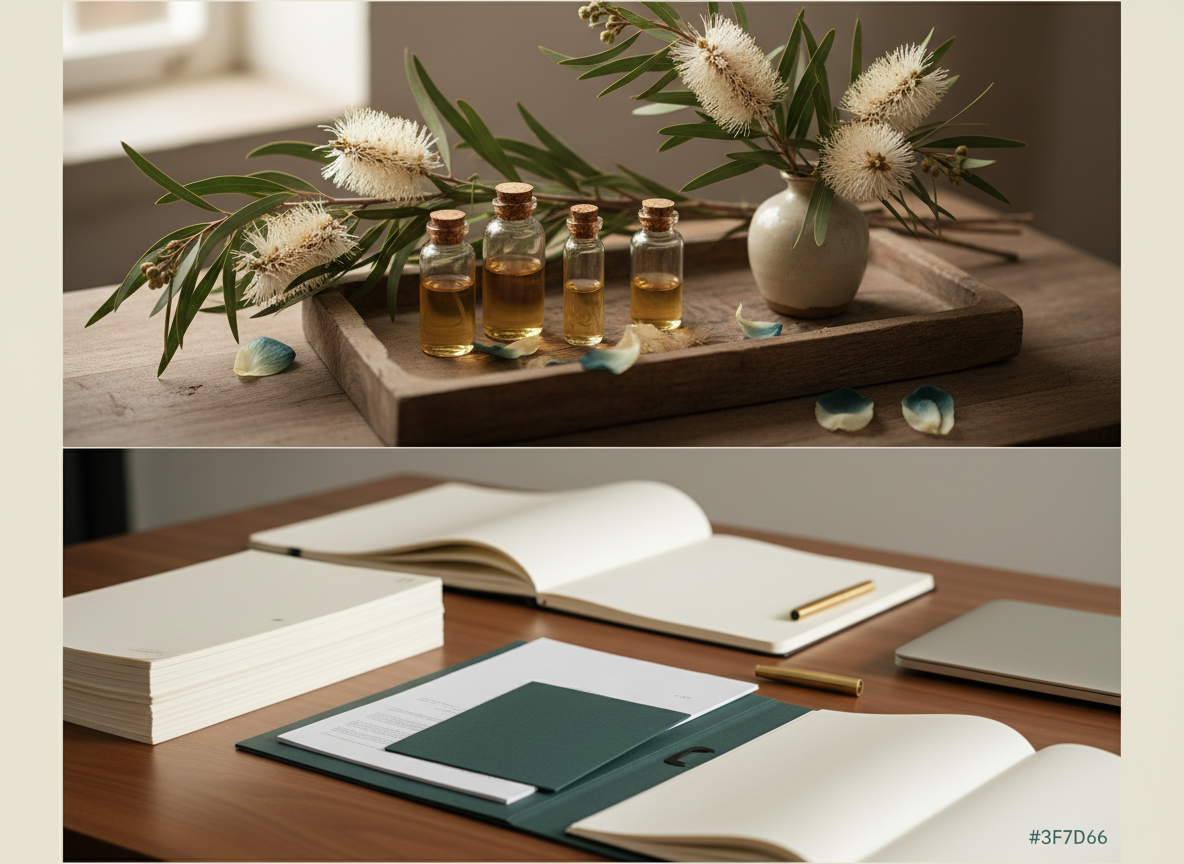
These recipes are sized for a standard 100ml ultrasonic diffuser. Adjust proportionally for larger or smaller units. All drop counts refer to essential oil drops added to water.
Living Room: Coastal Morning
This is the blend you want running when you open the blinds. It's bright and a little green, with enough lift to counteract overnight stuffiness without being aggressive.
- Cajeput: 3 drops
- Lemon: 3 drops
- Spearmint: 2 drops
Spearmint rather than peppermint keeps the mint note softer and more approachable in the morning. If you want something with a bit more energy in the afternoon, swap spearmint for peppermint and reduce to 1 drop.
Home Office: Clear Focus Atmosphere
When the afternoon heat sets in and concentration starts to slip, a sharper blend can help shift the room's atmosphere. This one leans into cajeput's more piercing quality.
- Cajeput: 4 drops
- Rosemary (ct. camphor or ct. 1,8-cineole): 2 drops
- Lemon: 2 drops
Rosemary and cajeput share camphoraceous character, so they stack well rather than competing. The lemon keeps it from going too sharp.
Kitchen: After-Cooking Reset
Cooking smells that are wonderful during dinner can linger in uncomfortable ways. This blend leans herbal and citrus rather than trying to overpower with sweetness.
- Cajeput: 2 drops
- Lime: 4 drops
- Basil (sweet): 2 drops
Lime works better than lemon here. It's slightly sharper and more volatile, which helps it move through cooking residue more effectively. Basil adds a familiar herbal note that reads as clean rather than perfumey.
Bedroom: Evening Wind-Down
Evening diffusing in summer calls for something that signals rest without being heavy. This blend softens cajeput considerably by pairing it with lavender and a touch of bergamot.
- Cajeput: 1 drop
- Lavender (true, Lavandula angustifolia): 4 drops
- Bergamot (bergapten-free): 3 drops
Just one drop of cajeput is enough to give the blend a clean, airy quality without dominating. If you find even that too sharp for bedtime, try steam-distilled bergamot without the lavender and skip cajeput altogether. Listen to your own preferences.
Bathroom: Fresh and Clean
Bathrooms in summer benefit from the most assertive blends. Small space, high humidity, limited ventilation. Cajeput handles it well.
- Cajeput: 4 drops
- Eucalyptus globulus: 2 drops
- Grapefruit: 2 drops
Grapefruit adds a slightly bitter, clean citrus edge that complements cajeput rather than sweetening it. Run this blend for 30 minutes after a shower when steam has peaked.
Seasonal Variations to Extend These Blends
Summer isn't a single temperature or mood. Early June feels different from late August. These are simple modifications to adapt your cajeput summer blends as the season moves.
Early Summer (Crisp and Green)
In early summer, pair cajeput with herbal notes: basil, rosemary, tarragon, or violet leaf absolute if you have access to it. The season still has some spring freshness, and green herbal combinations capture that well.
Peak Summer (Bright and Citrus-Forward)
July and August call for maximum lift. Lean into citrus pairings: lemon, lime, grapefruit, and yuzu if you can source it. Use cajeput as a sharpening agent rather than a dominant note, running 2 to 3 drops against 4 to 5 drops of citrus.
Late Summer (Softer Transition Blends)
As September approaches, you can start bridging toward warmer notes. Try cajeput with sweet orange, a touch of clary sage, or light florals like geranium. These combinations honor the remaining warmth while beginning to shift toward autumnal character.
A Note on Diffusion Timing in Hot Weather
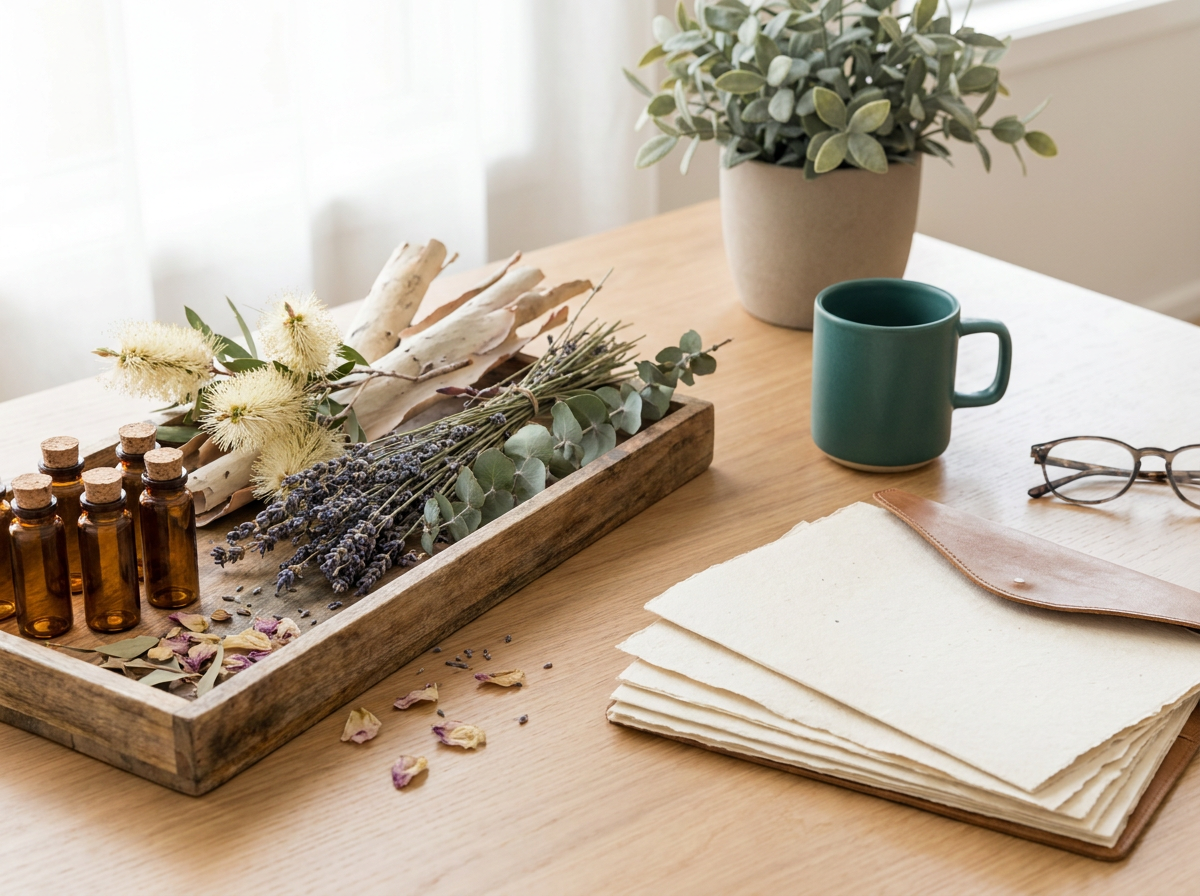
Diffuser timing matters more in summer than in winter. Heat naturally volatilizes scent, which means your diffuser works harder and scent dissipates faster in a warm room. A few practical adjustments:
- Run shorter cycles. 30 to 45 minutes on, 15 to 20 minutes off tends to maintain a pleasant background level without building up to something overwhelming.
- Position near airflow. Place your diffuser where air conditioning or a fan will carry the mist through the room rather than letting it pool in one spot.
- Reduce drops in small spaces. A bathroom or small office needs fewer drops than an open living area. Start at half the recipe amount and adjust upward if needed.
- Clean your diffuser more frequently. Residue builds faster in warm conditions. A weekly clean with a drop of cajeput oil and a cotton swab keeps performance consistent.
Beyond the Diffuser: Other Summer Uses for Cajeput
Diffusing is the most common application, but it's not the only one worth considering in summer.
Linen and Room Sprays
A simple room spray using distilled water, a small amount of unscented alcohol (such as high-proof vodka or perfumer's alcohol), and cajeput with supporting oils can be more convenient than a diffuser in some situations. Mix roughly 10 to 15 drops of total essential oil per 100ml of liquid, shake before each use, and mist sparingly into the air or onto fabric. Always test on an inconspicuous area first, as oils can affect some fabrics.
Closets, Shoes, and Storage Spaces
Summer brings its own particular storage challenges: gym shoes, beach bags, sports gear. Cajeput is well-suited to keeping closed spaces smelling fresh. Our guide to using cajeput for closets, shoes, and gym bags goes into practical detail on application methods that actually work.
Cotton Ball Diffusion
For spaces where an electric diffuser isn't practical, such as a car, a closet, or a bathroom without an outlet, a few drops on an unbleached cotton ball placed in a small dish or tucked into a corner can provide gentle, passive diffusion. Replace every 3 to 5 days.
Sourcing and Freshness: A Summer Consideration
Heat affects stored essential oils more than most people realize. If your cajeput has been sitting on a sunny windowsill or near a warm appliance, it may have already begun to oxidize. Oxidized oil smells noticeably duller and slightly harsh. It's also more likely to cause skin sensitivity if used in topical applications.
Summer is a good time to check your collection. Cajeput stored correctly in a cool, dark location away from heat sources has a shelf life of around 2 to 3 years from distillation. If you're not sure about your storage setup, the article on how to store cajeput oil for maximum shelf life covers everything from bottle material to ideal temperature ranges.
When purchasing fresh cajeput for summer blending, look for suppliers who provide batch-specific GC/MS testing data and can tell you the country of origin. Indonesian and Vietnamese cajeput are both commonly available; each has slightly different character, with Indonesian sources often showing a bit more depth. Island-Fresh Paperbark cajeput is sourced with full traceability, so you know what you're diffusing.
A Simple Starting Point
If you're new to summer blending with cajeput and want to start with just one recipe before exploring further, make the Coastal Morning blend. Three oils, eight drops total, and it works in almost any room. Run it for 30 minutes first thing in the morning and notice how the space feels differently afterward.
From there, the variations are endless. Cajeput rewards experimentation precisely because it plays well with so many other oil families. Spend one week in the citrus direction, one week going herbal, and by the time August arrives you'll have a clear sense of which combinations your household actually enjoys. That's the real point of seasonal blending: not following a formula, but developing an intuition for your own space.
Keep your oils stored properly, your diffuser clean, and your drop counts moderate. Summer air is already doing a lot. A well-chosen cajeput summer blend gives it a little help.